

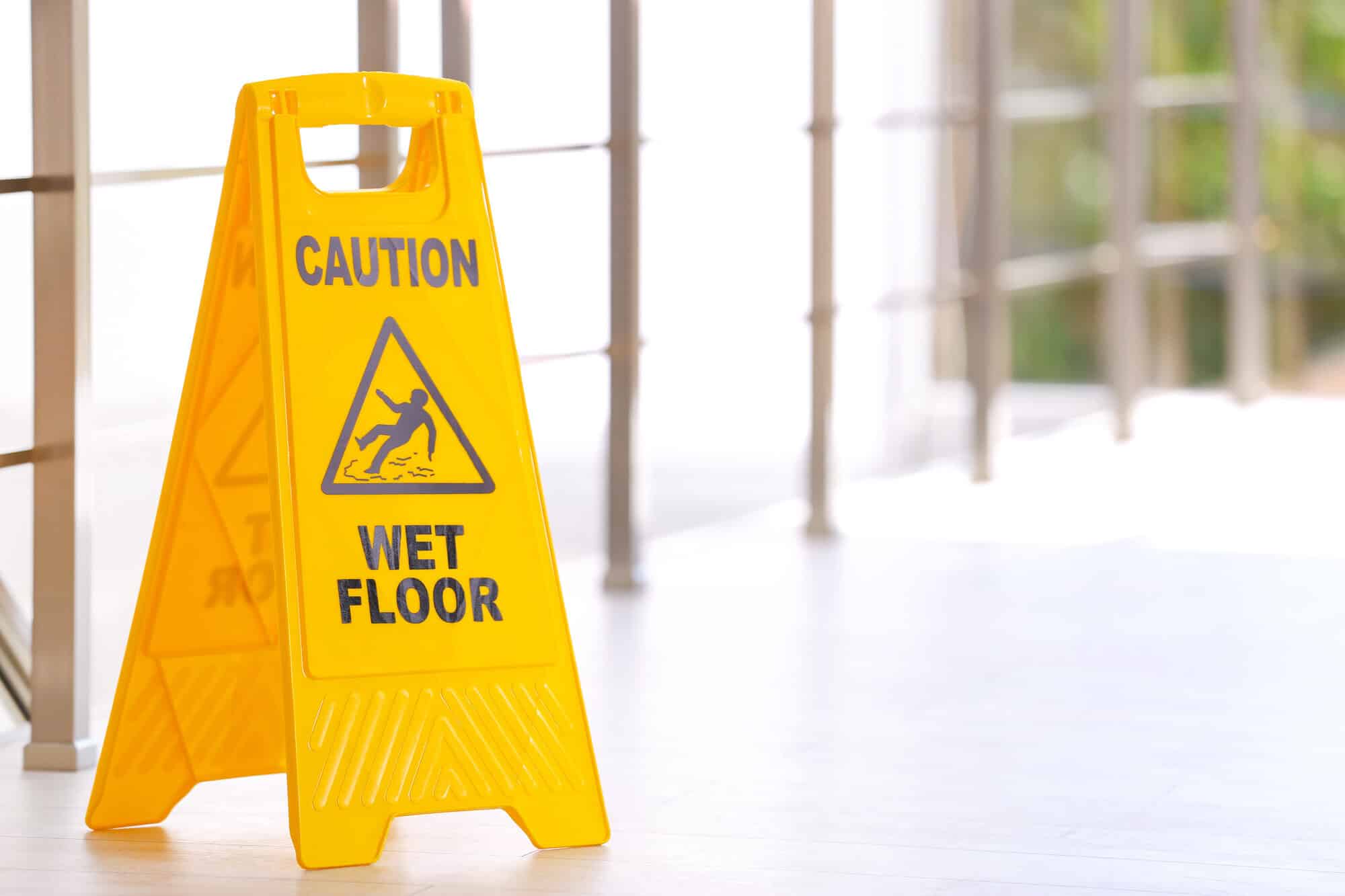
Being injured due to a slip or trip can be embarrassing, painful, and at times, life-changing. We have all, at some point in our lives, fallen in awkward and embarrassing ways. Typically, the first concern is who saw. However, there are occasions when these stumbles can cause serious injury, and the concern is much more than mere embarrassment. In these cases, an attorney is vital to ensuring you receive the medical treatment you need and the compensation you deserve.
At Rep Law in Surprise, Arizona, experienced attorneys help individuals navigate premises liability claims and fight for the compensation they deserve after an injury.
What Are Slip and Fall Claims?
Slip or trip and fall injury claims are a subtype of premise liability claims. These are claims that happen on a property owner’s land or business due to the owner leaving an unreasonably dangerous condition where someone is injured. Premise liability claims are more difficult to prove than negligence claims because the injured person must prove the condition was not just created or left negligently, but was unreasonably dangerous.
Property Owner Duties in Arizona
In Arizona, property owners are responsible for providing a safe and secure environment. However, the standards for how safe a property must be depend on the classification of the injured person. Arizona classifies people by legal status as invitees, licensees, or trespassers. Below is an explanation of the different standards a property owner is held to depending on the type of person who is injured.
Invitees
Property owners owe Invitees the highest standard of care. An invitee is someone who enters a premises at the property owner’s invitation or for a business purpose. Property owners must use reasonable care to make the premises safe, which includes an obligation to inspect for, discover, and either correct or warn of unreasonably dangerous conditions that the owner should reasonably foresee as endangering invitees.¹
For example, in McMurtry v. Weatherford Hotel, Inc., the court emphasized that a business owner must safeguard against or warn of unreasonably dangerous conditions.² Similarly, in Perez v. Circle K Convenience Stores, Inc., the court clarified that a business owner is not required to ensure absolute safety but must address unsafe conditions they created, knew about, or should have discovered through reasonable inspection.³
Licensees
Property owners owe Licensees a lower standard of care than they do Invitees. A licensee is someone who enters the property for their own purpose or benefit, with the owner’s permission but without a business purpose. Social guests are typically considered licensees. Property owners must refrain from knowingly allowing licensees to encounter hidden dangers and must avoid willful or wanton harm. They are not required to inspect the premises or make them safe for licensees.⁴
For instance, in Shannon v. Butler Homes, the court held owners owe no duty to licensees beyond warning of known hidden dangers or refraining from willful or wanton misconduct.⁵
Trespassers
Property owners owe Trespassers the lowest standard of care. Trespassers are individuals who enter the property without permission. The duty owed to trespassers is minimal. Landowners are generally only required to refrain from willfully or wantonly causing harm to trespassers. However, exceptions may apply, such as the attractive nuisance doctrine, which imposes a higher duty of care toward child trespassers in certain circumstances.⁶
Recreational and Educational Use
While these are the three main types of users in Arizona law, there is also a statute that protects landowners further when recreational and educational users are on the property. Under A.R.S. § 33-1551, landowners who make their property available for recreational or educational use without charging a fee are not liable for injuries to such users unless the landowner engages in willful, malicious, or grossly negligent conduct that directly causes the injury. Recreational users are deemed to accept the risks inherent in their activities.
Determining Liability
The first step to bring a successful claim is to determine the type of user, which sets the standard of care for the owner, and then to determine if the condition was unreasonably dangerous. However, there are also defenses an owner can employ to shirk liability.
Common Defenses
Open and Obvious Condition
The open and obvious nature of a condition is a factor in determining whether it is unreasonably dangerous. For example, while a spill in a store may seem unreasonably dangerous, if the owner puts a wet floor sign in a conspicuous location that will warn of the spill, then it may become open and obvious, which means the injured person should have seen the condition and avoided the issue.
Comparative Fault and Assumption of Risk
Arizona follows a comparative fault system under A.R.S. § 12-2505, where a plaintiff’s damages may be reduced in proportion to their degree of fault. Assumption of risk is also a factual question for the jury, and intentional or willful conduct by the claimant may bar recovery.⁷
Knowledge of the Dangerous Condition
Often, when someone is injured at a business, the question is, did an employee/agent know of the unreasonably dangerous condition, or should they have known? This comes into play when there is an unreasonably dangerous condition present, but an agent of the owner was not aware of the danger.
For example, if someone shopping at a store spills a drink and another shopper slips immediately after, then the business owner likely did not have time to rectify the condition and therefore is not liable for the injury. However, in those same circumstances, if the condition is present for a period during which an agent or employee should have rectified the condition, then the owner will likely be liable.
Why You Should Speak with an Attorney
In summary, premise liability claims can be difficult. There are nuances to every claim. That is why it is imperative to consult with an attorney as soon as possible after an injury. The sooner legal counsel is involved, the more accurate the investigation will be, and it is more likely that the condition that caused the issue will be unchanged.
Rep Law’s attorneys in Surprise, Arizona, are experienced at helping those who have been injured because a property owner fails to keep a safe environment. They have had tremendous success in recovering compensation their injured clients deserve, regardless of the type of premise liability claim.
They have experience working with architects, safety professionals, engineers, and other qualified experts to evaluate buildings and structures for compliance with safety codes and regulations.
Schedule a Consultation Today
If you’ve been injured in a slip or fall accident, contact Rep Law today to discuss your case and protect your rights. Their experienced team is ready to help you pursue the compensation you deserve.
Sources
- Markowitz v. Arizona Parks Bd., 146 Ariz. 352
- McMurtry v. Weatherford Hotel, Inc., 231 Ariz. 244
- Perez v. Circle K Convenience Stores, Inc., 564 P.3d 623
- Shannon v. Butler Homes, 102 Ariz. 312
- Shannon v. Butler Homes, 102 Ariz. 312
- Shaw v. Petersen, 169 Ariz. 559; Western Truck Lines, Ltd. v. Du Vaull, 57 Ariz. 199
- A.R.S. § 12-2505; Wickham v. Hopkins, 226 Ariz. 468

